Contents

Linux 嵌入式開發 – 並行開發—進程與線程

Linux 嵌入式開發 – 並行開發—進程與線程

Process概念

  • program
    • 存放在disk上的指令和數據的有序集合(文件)
    • 靜態的
  • process
    • 執行一個program所分配的資源總稱
    • 是program一次執行的總稱
    • 動態的,包括創建,調度,執行,死亡
    • 有獨立的地址空間
    • linux為每個進程創建task_struct

Process 內容

1
2
3
 process   ----------| 正文段      |--------
           --------- | 用戶數據段   |----program
           --------- | 系統數據段   |

Process control block

  • PID
  • process user
  • process status / priority
  • file description table

Process 類型

  • 交互進程:在shell下啟動,可在前臺/後台運行
  • 批處理進程:和在終端無關,被提交到一個作業隊列中以便順序執行
  • 守護進程:和終端無關,一直在後台運行

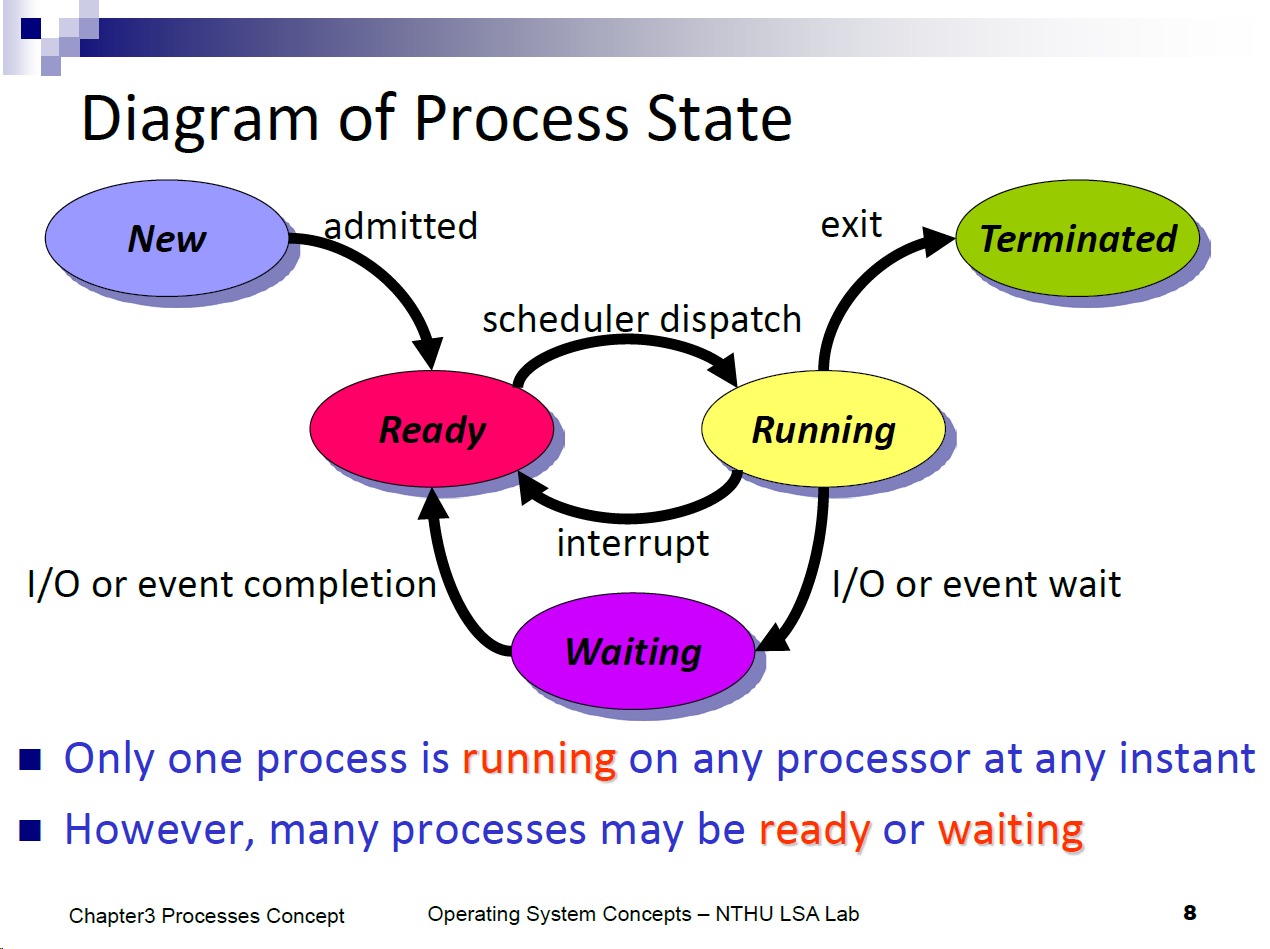
Process status

  • running / ready
  • waiting
    • interrupt
    • not interrupt
  • terminated : 收到signal後可以繼續運行
  • zombie : pcb沒有被釋放

殭屍與孤兒

  • 殭屍:一個process 使用fork()建立child,如果child退出(terminated),而父進程沒有呼叫wait/waitpid並回收時,OS進程表中仍然存在子進程的進程控制塊(PCB),長時間保持殭屍狀態會導致resource leak

    • 簡而言之可以說子進程已死但沒有被回收,且kill()指令對其無效
  • 孤兒:process fork後,父程序退出,但他的一個或多個子程序還在執行,這些子程序即是孤兒程序,孤兒程序將被init程序(程序號為1的程序)所收養,並由init程序對它們完成狀態收集工作。

  • 收割殭屍進程的方法是通過kill命令手工向其父進程發送SIGCHLD信號。如果其父進程仍然拒絕收割殭屍進程,則終止父進程,使得init進程收養殭屍進程。init進程周期執行wait系統調用收割其收養的所有殭屍進程。

    為避免產生殭屍進程,實際應用中一般採取的方式是:

    1. 將父進程中對SIGCHLD信號的處理函數設為SIG_IGN(忽略信號或稱作不註冊handler)-> 子進程死掉會直接被回收
    2. fork兩次並殺死一級子進程,令二級子進程成為孤兒進程而被init所「收養」、清理

https://i.imgur.com/0LavzmI.png

Thread

  • process在切換時系統開銷大
  • 同一個process中的thread共享相同的空間
  • Linux 不區分thread process

特點

  • 通常thread指的是共享地址空間的多個任務
  • 大大提高了任務切換的效率
  • 避免額外的TLB & cache的刷新

thread共享:

  • 可執行的命令
  • 靜態資料
  • 進程中打開的file descriptor
  • 當前工作目錄
  • user id
  • user group id

thread私有:

  • tid
  • pc & 相關暫存器
  • stack & heap
  • errno
  • priority
  • 執行狀態和屬性

Linux thread lib

pthread提供如下基本操作

  • 創建
  • 回收
  • 結束

同步和互斥機制

  • 信號量
  • 互斥鎖

創建

1
2
3
#include<pthread.h>
int pthread_create(pthread_t *thread, const pthread_attr_t *attr,
                    void *(*routine)(void *), void *arg);
  • thread 線程對象
  • attr 線程屬性,NULL表示默認
  • routine線程執行的函數
  • arg 傳遞給routine的參數
  • 成功返回0

回收

1
2
#include<pthread.h>
int pthread_join(pthread_t thread, void **retval);
  • thread要回收的對象
  • 調用thread阻塞直到thread結束
  • *retval接收thread 的返回值

結束

1
2
#include<pthread.h>
int pthread_exit(void *retval);
  • 結束當前線程
  • retval可以被其他thread通過pthread_join獲取
  • thread私有資源將被釋放

範例

 1
 2
 3
 4
 5
 6
 7
 8
 9
10
11
12
13
14
15
16
17
18
19
20
21
22
23
24
25
26
27
28
29
30
/*thread_demo.c*/
#include<pthread.h>
#include<stdio.h>
#include<string.h>
#include<stdlib.h>
#include<unistd.h>

char msg[32] = "Hello World";

void *thread_func(void *arg)
{
	sleep(1);
	strcpy(msg, "mark by thread");
	pthread_exit("3Q for waiting for me");

}
int main(void)
{
	pthread_t a_thread;
	void *result;

	if(pthread_create(&a_thread,NULL,thread_func,NULL)!=0){
		printf("fail to pthread_create");
		exit(-1);
	}
	pthread_join(a_thread, &result);
	printf("result is %s\n",result);
	printf("msg is %s\n",msg);
	return 0;
}

編譯:

1
2
3
4
$ gcc -o thread_demo thread_demo.c -lpthread
$ ./thread_demo 
result is 3Q for waiting for me
msg is mark by thread

Thread通信 – 同步synchronization

  • 由信號量來決定線程是繼續運行還是阻塞

信號量

  • 信號量代表某一類資源,其值表示系統中該資源的數量
  • 是一個受保護的變數,只能通過三種操作來訪問
    • 初始化
    • P操作(申請資源)
    • V操作(釋放資源)=> 一定會阻塞

P/V操作

  • P(S): if(信號量>0){ 申請資源的任務繼續運行; 信號量的值減1; } else{ 申請資源的任務阻塞 };

  • V(S): 信號值加一 if(有任務在等待資源){ 喚醒等待的任務,讓其讓其繼續運行 }

Posix 信號量

  • posix有兩種信號量

    • 無名信號量(基於memory的信號量)=> 用於線程
    • 有名信號量 => 可用於線程或是進程
  • pthread庫常用的信號量操作函數:

1
2
3
int sem_init(sem_t *sem, int pshared, unsigned int value);
int sem_wait(sem_t *sem); // P操作
int sem_post(sem_t *sem); // V操作

初始化

1
2
#include<semaphore.h>
int sem_init(sem_t *sem, int pshared, unsigned int value);
  • 成功返回0,失敗時EOF
  • sem指向要初始化的信號量對象
  • pshared 0-thread間,1-process間
  • val信號量初值

P/V操作

1
2
3
#include<semaphore.h>
int sem_wait(sem_t *sem); // P操作
int sem_post(sem_t *sem); // V操作
  • 成功返回0,失敗時EOF
  • sem指向要初始化的信號量對象

線程同步–範例一

兩個線程同步讀寫緩衝區(生產者與消費者問題)

 1
 2
 3
 4
 5
 6
 7
 8
 9
10
11
12
13
14
15
16
17
18
19
20
21
22
23
24
25
26
27
28
29
30
31
32
33
34
35
36
37
/*不嚴謹*/
#include<stdio.h>
#include<stdlib.h>
#include<unistd.h>
#include<semaphore.h>
#include<string.h>

char buf[32];
sem_t sem;
void *function(void *arg);

int main(void)
{
        pthread_t a_thread;
        if(sem_init(&sem,0,0)<0){
                perror("sem_init");
                exit(-1);
        }
        if(pthread_create(&a_thread,NULL,function,NULL)!=0){
                printf("fail\n");
                exit(-1);
        }
        printf("input 'quit'to exit\n");
        do{ //stdin write
                fgets(buf,32,stdin);
                sem_post(&sem);
        }while(strncmp(buf,"quit",4)!=0);
        return 0;
}
void *function(void *arg)//read 
{
        while(1)
        {
                sem_wait(&sem);
                printf("you enter %d characters\n",strlen(buf));
        }
}
 1
 2
 3
 4
 5
 6
 7
 8
 9
10
11
12
13
14
15
16
17
18
19
20
21
22
23
24
25
26
27
28
29
30
31
32
33
34
35
36
37
38
39
40
41
42
43
44
45
/*嚴謹*/
#include<stdio.h>
#include<stdlib.h>
#include<unistd.h>
#include<semaphore.h>
#include<string.h>

char buf[32];
sem_t sem_r,sem_w;
void *function(void *arg);

int main(void)
{
        pthread_t a_thread;
        if(sem_init(&sem_r,0,0)<0){
                perror("sem_init");
                exit(-1);
        }
        if(sem_init(&sem_w,0,1)<0){
                perror("sem_init");
                exit(-1);
        }

        if(pthread_create(&a_thread,NULL,function,NULL)!=0){
                printf("fail\n");
                exit(-1);
        }
        printf("input 'quit'to exit\n");
        do{ //stdin write
                sem_wait(&sem_w);
                fgets(buf,32,stdin);
                sem_post(&sem_r);
        }while(strncmp(buf,"quit",4)!=0);

        return 0;
}
void *function(void *arg)//read 
{
        while(1)
        {
                sem_wait(&sem_r);
                printf("you enter %d characters\n",strlen(buf));
                sem_post(&sem_w);
        }
}

互斥

  • 臨界資源 (共享資源)

    • 一次只允許一個任務(進程、線程)訪問的共享資源
  • 臨界區

    • 訪問臨界資源的code
  • 互斥機制

    • mutex互斥鎖
    • 任務訪問臨界資源前,申請鎖,訪問完後釋放鎖

互斥鎖初始化

1
2
3
#include<pthread.h>
int pthread_mutex_init(pthread_mutex_t *mutex,
    const pthread_mutexattr_t * attr);
  • 成功時返回0,失敗返回錯誤
  • mutex指向要初始化的互斥鎖對象
  • attr互斥鎖屬性,NULL表示缺少屬性

申請鎖

1
2
#include<pthread.h>
int pthread_mutex_lock(pthread_mutex_t *mutex);
  • 成功時返回0,失敗返回錯誤
  • mutex指向要初始化的互斥鎖對象
  • 如果無法獲得鎖,任務阻塞

釋放鎖

1
2
#include<pthread.h>
int pthread_mutex_unlock(pthread_mutex_t *mutex);
  • 成功時返回0,失敗返回錯誤
  • mutex指向要初始化的互斥鎖對象
  • 執行完臨界區必須即時釋放鎖

範例

 1
 2
 3
 4
 5
 6
 7
 8
 9
10
11
12
13
14
15
16
17
18
19
20
21
22
23
24
25
26
27
28
29
30
31
32
33
34
35
36
37
38
39
40
41
42
43
44
45
46
47
48
49
50
51
52
#include<stdio.h>
#include<stdlib.h>
#include<unistd.h>
#include<pthread.h>
#include<string.h>
#define _LOCK_
unsigned int count, value1,value2;
pthread_mutex_t lock;

void *func(void *arg);
int main(){
    pthread_t a_thread;
    if(pthread_mutex_init(&lock, NULL) != 0){
        printf("fail to pthread init\n");
        exit(-1);
    } 
    if(pthread_create(&a_thread,NULL,func,NULL)!=0)
    {
        printf("fail to pthread create");
        exit(-1);
    }
    while(1){
        count++;
        #ifdef _LOCK_
            pthread_mutex_lock(&lock);
        #endif
            value1 = count;
            value2 = count;
        #ifdef _LOCK_
            pthread_mutex_unlock(&lock);
        #endif
    }
    return 0;
}
void *func(void *arg)
{
    while(1)
    {
        count++;
        #ifdef _LOCK_
            pthread_mutex_lock(&lock);
        #endif
            if(value1 != value2)
            {
                printf("value1 = %u,value2 = %u\n",value1,value2);
                usleep(1000000);
            }
        #ifdef _LOCK_
            pthread_mutex_unlock(&lock);
        #endif
    }
}

編譯:

1
2
3
4
使用互斥鎖
gcc -o test test.c -lpthread -D_LOCK_
不使用互斥鎖
gcc -o test test.c -lpthread